
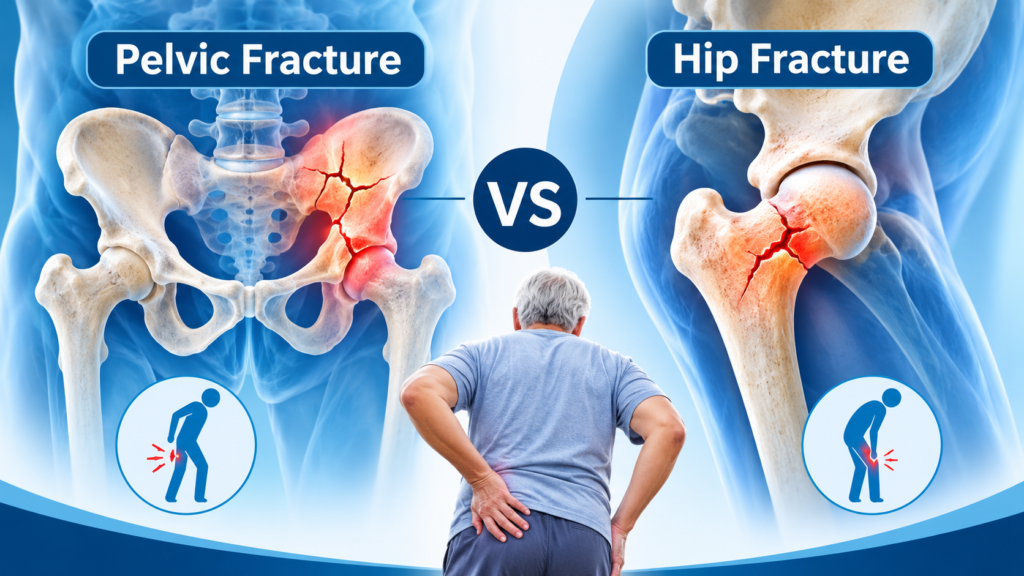
The hip joint, pelvic bone, and even sports injuries can result in painful fractures near the hip and pelvic bone. Not all types of fractures that occur in this area involve the same bone, however. According to research, one study found that among pelvic fracture vs hip fracture, the most common type of fracture is hip fractures as it’s affecting frequency is five time as compare to pelvic fractures.
It is vital to know the differences between pelvic and hip fractures since both are quite distinct in their causes, associated complications, and even the way in which they are to be treated. Depending on their complexity, some fractures can be treated with rest, while others require surgery for proper recovery. Here, we will take a closer look at the differences between them.
Pelvic Fracture vs Hip Fracture: What’s the Difference?
Most people are confused about the difference between hip fractures and pelvic fractures. You may wonder, ” How to I tell the difference between a hip fracture and a pelvic fracture?” Let’s understand the difference between these two types of fractures.
Pelvic fracture – causes & treatment
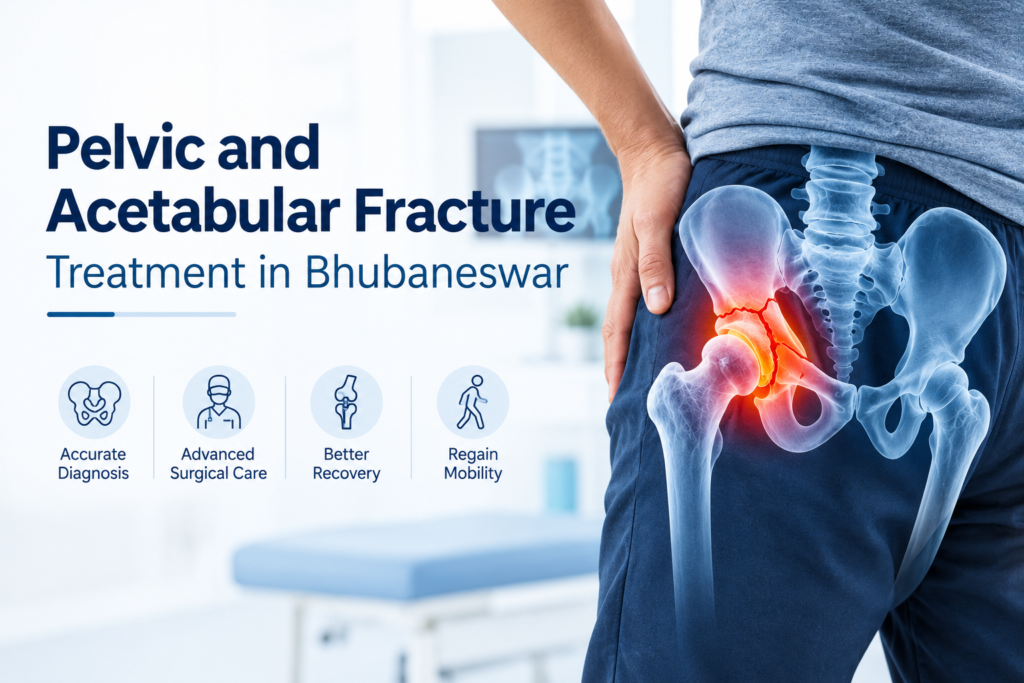
A pelvic fracture occurs when there is a break in the pelvic ring (composed of hip bones such as the pubis, ilium, and ischium). Pelvis ring is of butterfly shaped situated near abdomen and hip bones.
Pelvic fractures can occur due to car accidents/ crashes, pedestrian accidents, or other falls. Apart from these, many low-energy traumas, such as slipping in the bathroom or falls from small heights, can also cause pelvic fractures, particularly in people with osteoporosis.
Minor pelvic fractures can be treated non-surgically, but in the case of some serious fractures, an orthopaedic surgeon needs to perform surgical procedures such as angiographic embolization, emergency stabilization, and open reduction and internal fixation (ORIF).
Hip fracture – causes & treatment
A hip fracture occurs in femur (thigh bone), which is located near the hip joint, and that’s why it needs immediate medical attention, because if not fixing on right time, it can lead to complicated deformities such as avascular necrosis (AVN), or even increase infection risk.
The causes include falls, intense traumatic activities, osteoporosis, and sometimes a sedentary lifestyle. Additionally, if an individual already has certain medical conditions, such as strokes, thyroid disorders, or low blood pressure, these can increase the severity of imbalance, which may further contribute to hip fractures.
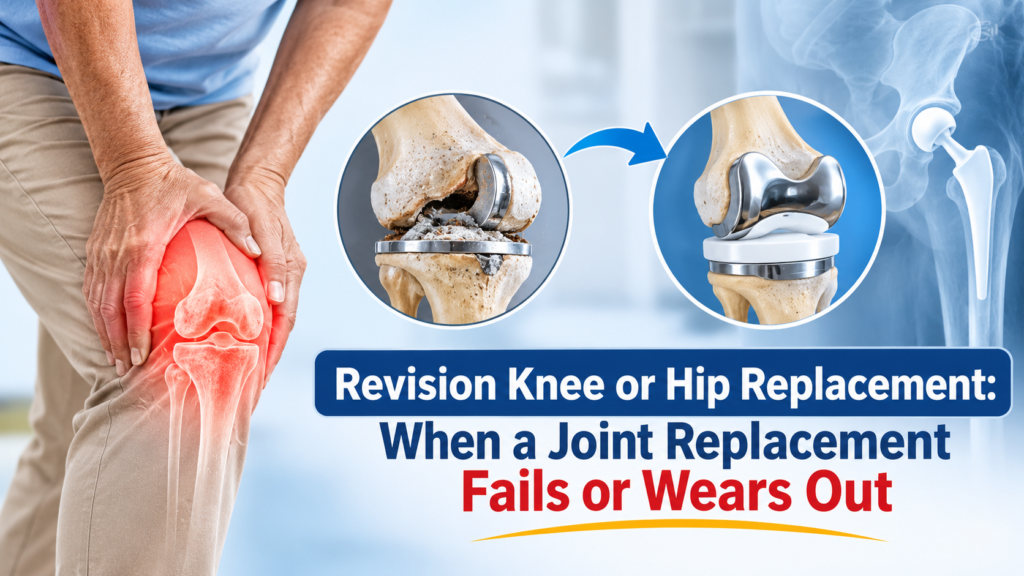
The treatment modalities completely depend on the individual’s fracture severity. For example, if the fracture is critically serious, doctors perform surgeries such as partial or total hip replacement, or fix the fracture internally using pins, screws, or rods. Don’t worry; your body will show you some signs of bone fracture recovery, which tell you that your bone fracture is healing faster.
Can you walk with a fractured hip or pelvis?
Walking depends on your fracture condition. According to Dr. Kishore Kumar Panda, patients should always consult their orthopedic surgeon before performing any physical activity that could worsen their condition.
During hip fractures, it’s not a good idea to walk or even stand, because doing this can only make your fracture worse or even lead to serious complications such as nearby tissue damage or blood clotting. After the proper treatment, your doctor will mentor you about walking the right way, so that it won’t affect your treatment session.
During pelvic fractures, walking may be harmful, especially if the fracture is unstable, as it can increase the chances of damage to other internal organs. However, after proper treatment and under a doctor’s supervision, patients can gradually learn to walk while maintaining their balance.
How do you know if you have a pelvic or hip fracture?
According to Dr. Kishore Kumar Panda, these common signs of pelvic or hip fractures can give you an idea of whether you may have a hip fracture or a pelvic fracture.
If you have a pelvic fracture, you may experience:
- excruciating pain in or near the groin area, hips, or lower back, which becomes intolerable when you move.
- difficulty walking, standing, or performing any physical activity.
- in case of some internal pelvic injuries, you will feel dizziness and breathing difficulty.
- tingling sensation in your groin area or in legs.
If you have a hip fracture, you may experience:
- pain that persistently moves to other parts
- extreme difficulty sitting, walking, or even bearing some weight on the affected leg.
- in some cases, doctors have observed upheaval changes in patients with hip fractures, where one leg appears shorter than the other.
- bruising, swelling, or tenderness around the hip joint region
It’s important that you consult the right orthopaedic doctor before following your own intuition because the right ortho doctor will first perform some tests to spot the exact problem and its root cause, and then suggest a better treatment procedure.
Conclusion
Whether it’s a hip fracture or a pelvic fracture, it’s not something that can heal itself; it requires urgent medical attention. Even if not treated on time, it can worsen or make it difficult for a person to walk or move around.
What’s important is to diagnose the condition behind a pelvic fracture vs hip fracture, and fix it because many people assume that any type of pain in the hip region is a sign of a hip fracture.