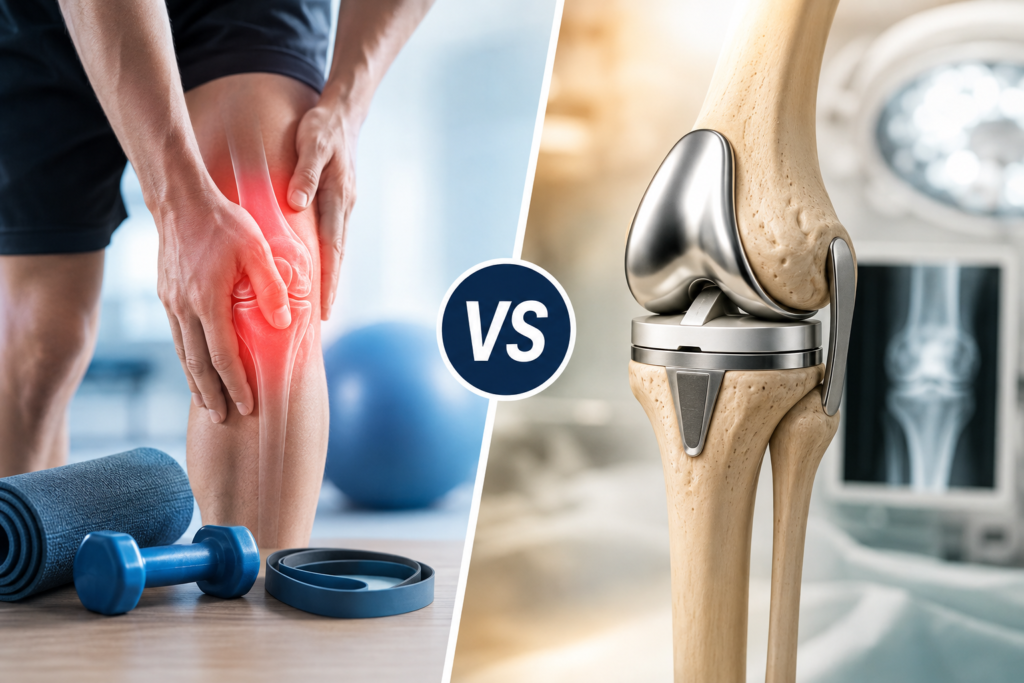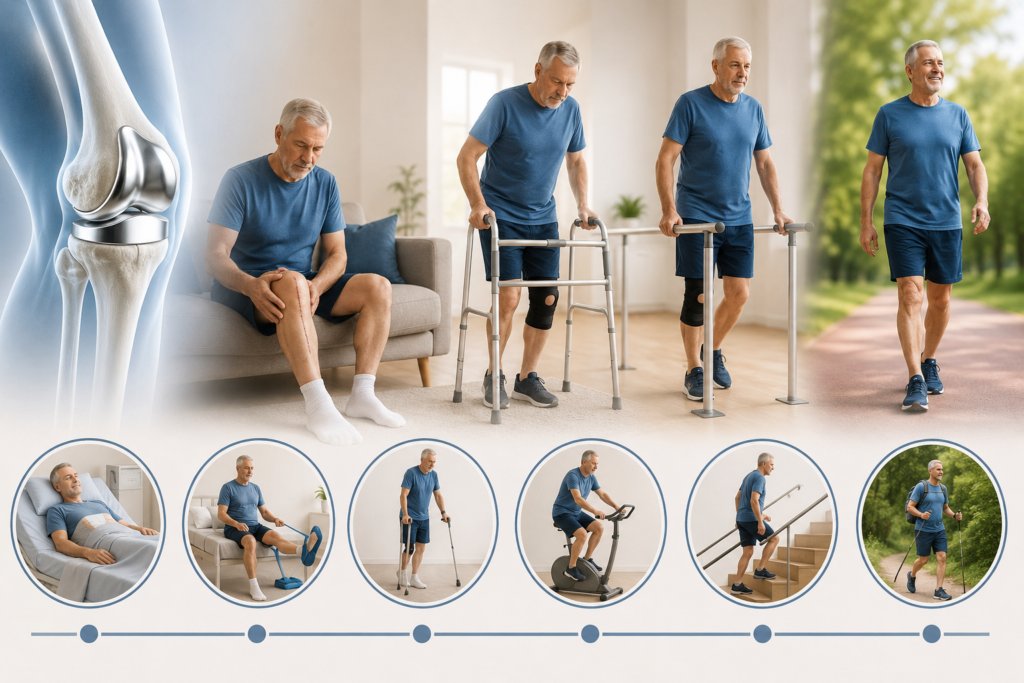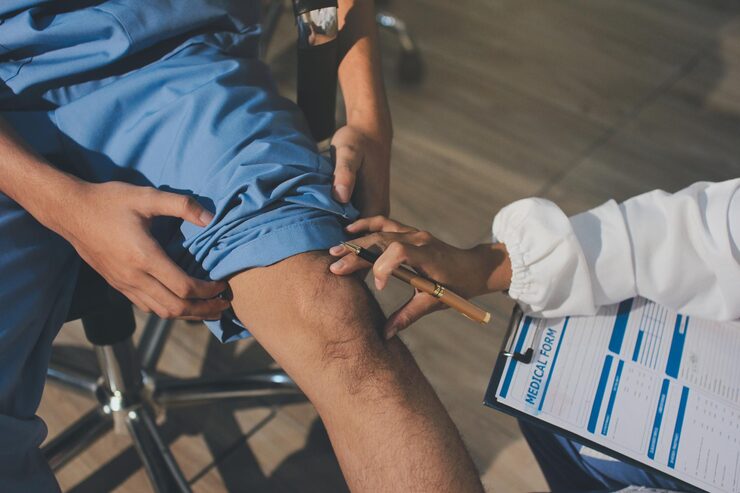

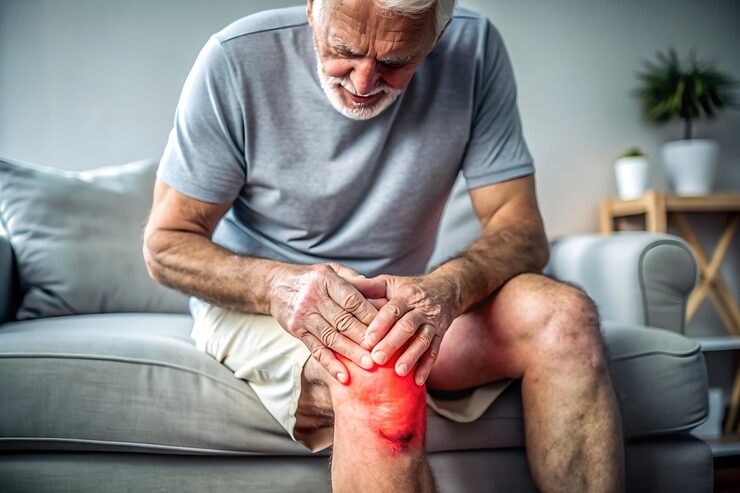
You were doing great just a few days ago, but suddenly one fine morning you realise that climbing stairs seems to be difficult. How is it possible? In fact, knee pain seldom appears unexpectedly. It means either your body tries to signal to you that you need to calm down, or something unexpected has happened to you and requires your consideration. If you neglect the knee pain causes and your health state, sooner or later you will need to undergo the knee replacement surgery.
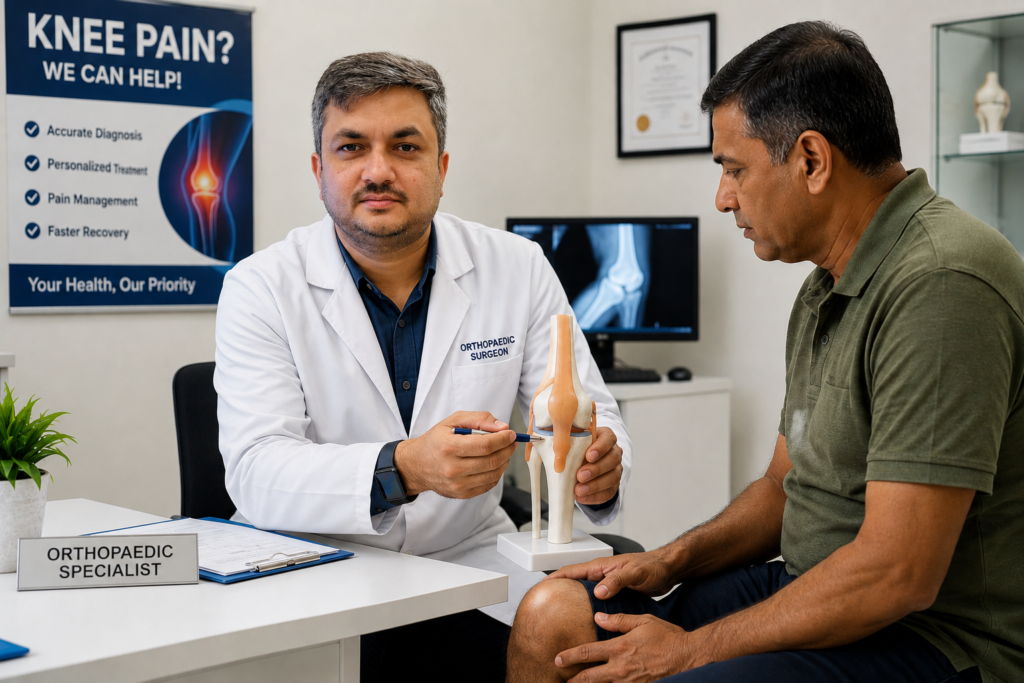
This is the reason why knowing the reasons of knee pain is the first step to your well-being and comfort. And now Dr Kishore Kumar Panda is explaining what the most common reasons for this problem are, how to treat it, what symptoms it has, some home remedies for it and when you need to see an orthopaedist.
What Is Knee Pain?
Any ache and stiffness or pain experienced in the joint of the knee could be pain of the knee joint. Knee paincan develop suddenly after sustaining a injury in that region or it can arise and progress steadily during the weeks or years leading up. Anyone working and moving on that leg a whole lot might eventually experience some and the knees and minor amounts of pain from.
How the Knee Joint Works & Why Knee Pain Is So Common
Each time you walk, your knee receives a lot of pressure. Injuries, old age, extra weight, repeated motion, or illness may affect that balance in the long run. If there is an issue within a certain area of your joint, the only way your knee tells you is via pain.
The World Health Organisation estimates that 365 million people with osteoarthritis in their knees worldwide. One of the most common causes for knee pain, they are also a significant cause for knee injury.
Top 5 Common Knee Pain Causes
Not every knee pain has a particular cause. Therefore, one should not just guess nor self-diagnosis, Instead. One should refer to the top orthopaedic surgeon, Dr Kishore Kumar Panda. Let’s get to know what the top 5 reasons for your knee pain can be.
1. Osteoarthritis
Osteoarthritis is one of the leading causes of knee pain, especially in people over 50. You may notice:
- Morning stiffness
- Pain while climbing stairs
- Swelling around the joint
- A grinding or cracking sensation
2. Ligament Injuries
A sudden twist while playing sports or an awkward fall can damage the ligaments that keep your knee stable.
3. Meniscus Tear
The meniscus acts like a shock absorber inside your knee. A quick twist or sudden movement can cause it to tear. Common symptoms include:
- Sharp pain
- Swelling
- Difficulty straightening the leg
4. Tendinitis
Frequent running, jumping, cycling, or climbing exacerbates knee tendons, and causing pain that eases with rest.
5. Bursitis
Inside your knee, there are tiny fluid sacs that prevent friction. If a bursa inside the knee becomes irritated from extended kneeling, by an injury, or a type of infection then it may be inflamed. This condition can include swelling, a sore knee, and pain with bending.
Knee Pain Symptoms You Should Never Ignore
Some discomfort after workouts should come and go quickly. Some others need immediate attention:
- pain persists multiple days
- continuing, ever-worsening swelling of the knee
- painful to ambulate or bear weight on the knee
- sudden instability of the knee
- any area of redness around your knee
- any sharp or excessive pain following a traumatic incident to your knee
- any redness of the knee associated with a fever
If the signs and symptoms persist, your condition may deteriorate even further.
Knee Pain Treatment Options
Orthopaedic surgeon will use either X-rays or MRIs to find what is wrong so that they can select which treatment would be appropriate.
Medication
Various pain-relieving and anti-inflammatory medicines will provide a great amount of relief and improve day to day movement.
Physiotherapy
This form of treatment utilises targeted exercises to improve the strength of the muscles around the knee, joint flexibility and functional recovery.
Lifestyle modifications
Small, simple modifications can be very helpful, from weight management and wearing appropriate footwear to preventing vigorous activities.
Knee braces
Braces will support and help stabilise the joint during the recovery stages.
Injections
Various conditions may warrant injections in order to combat pain and inflammation.
Surgery
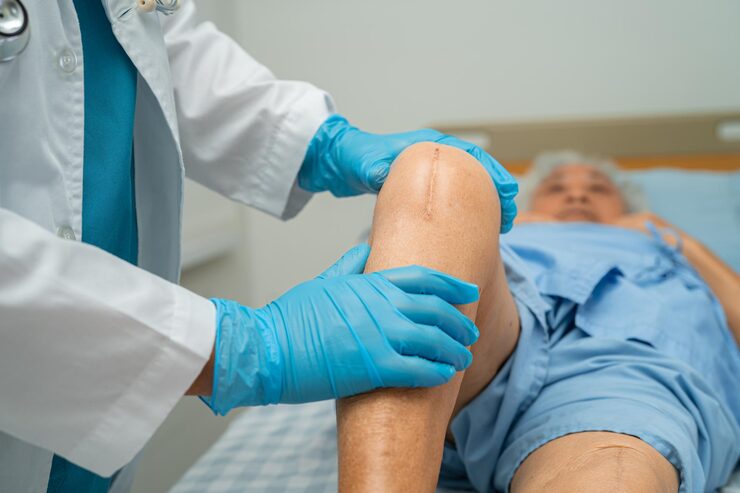
If previous, non-surgical methods have not worked sufficiently, then surgery can be performed to deal with the issue, whether this be arthroscopy, ligament reconstruction or knee replacement surgery.
Home Remedies to Reduce Knee Pain
Important home remedies you can try to reduce the pain:
- Rest The Painful knee as much as you can
- Use an ice pack, and place the ice pack on the painful spot so the area cools down to soothe the pain
- Raise the pain relief leg elevation of the injured leg should prevent swelling
- Wear comfortable shoes a comfortable, cushioned pair of shoes.
- Do certain stretches that your orthopaedic may suggest.
- Keeping your weight within your weight management
- Keep joints healthy, fueled by a diet abundant in Calcium, Vitamin D and Protein.
However, do not get complete home remedies with home treatments. Consult the nearest Orthopedic doctor.
When Should You See an Orthopaedic Doctor?
Delaying knee treatment to disappear itself, could eventually develop into a deeper trouble down the line. If the pain occur, it’s very important to identify the knee pain causes which makes you feel like:
- Your knee pain is more than one week old.
- You find it difficult to walk.
- Knee goes into recurring swelling .
- There is a clicking, locking or popping feeling that causes the pain.
- Your knee feels unstable and weak. …
- You wake up in the night with knee pain.
- You fall down, injure your knee at sports.
All these indications tell you to visit Dr Kishore Kumar Panda, the best orthopaedic surgeon in Bhubaneswar.