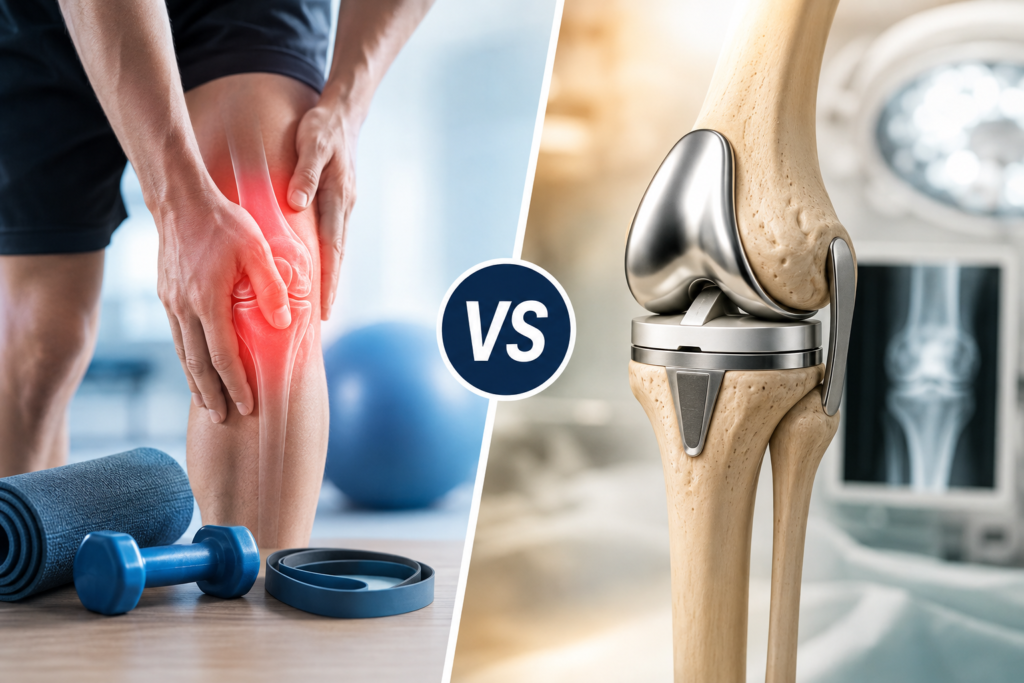


Knee pain limits our activities. Whether you are going to the office or taking a simple morning walk, every time you feel like you can’t do these activities anymore. Taking pain-relieving tablets gives you only temporary relief, but pain remains the same; in fact, it becomes intensified if you ignore the complete treatment.
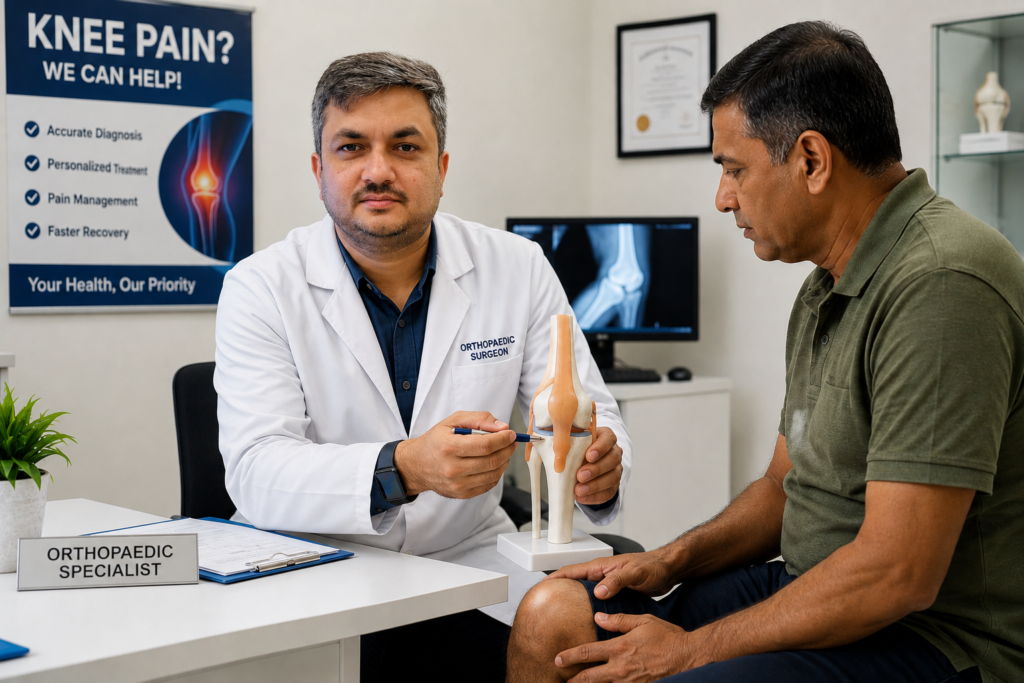
Even in a few situations, when knee pain causes unbearable pain, consulting an orthopedic surgeon knee replacement specialist is the only way to make your knees functional again. According to Dr Kishore Kumar Panda, knee replacement surgery has a success rate of 90% to 95%, making it a promising treatment option.
What is knee replacement surgery?
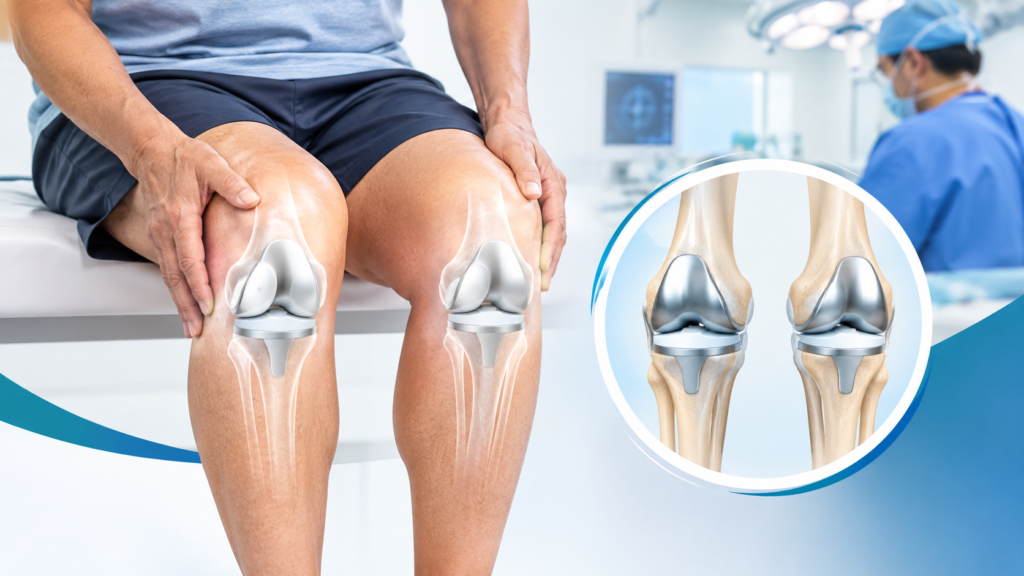
Knee replacement surgery refers to the replacement of the affected knee joint with an artificial knee joint (composed of plastic and metal).
- Surgery took 1 to 2 hours.
- According to the Journal of Arthroplasty, approximately 90% patients get relief in pain after knee replacement surgery.
- The Lancet studies found that almost 82% total knee replacement functions properly even after 25 years.
The need and type of surgery depend on the patient’s condition. For example, sometimes only the affected area is replaced (partial knee replacement), and in some conditions, the patient’s whole knee joint is replaced, that is, total knee replacement.
What to Expect Before, During, and After Knee Replacement Surgery
Many times, people often ignore postoperative care, leading to major consequences. Here are the things that matter before, during, and after the surgical procedure:
Before the knee replacement surgery
This is the preoperative phase, which confirms all the necessary preparation required for the surgery, such as:
- Medical check-ups to understand individual conditions. This includes tests like X-rays, physical examination, imaging tests, blood tests, and medical background.
- Body strength training so that patient recovery time improves
- Complete lifestyle modifications, such as taking healthy meals, losing some weight, stopping smoking, and managing diabetes
- Before your surgery, make your home recovery-friendly. Clear things that could make you trip, keep important items close by, create a comfortable place to rest, and install support bars if you think you may need extra help.
Things happening during the surgery
This is the main step of the surgery, where the surgical procedure is performed in the following steps:
Step 1: Firstly, the doctor injects anaesthesia to ensure that the individual doesn’t feel any pain during the surgery.
Step 2: An orthopaedic surgeon makes a small cut to check the damaged area internally.
Step 3: Removing the affected part, such as bone and cartilage from the thigh bone (femur), and shin bone (tibia).
Step 4: The doctor replaced those damaged parts with prosthetic implants.
Step 5: After successfully replacing damaged joints, the doctor tests its movement, stability, and alignment, and makes sure it works properly.
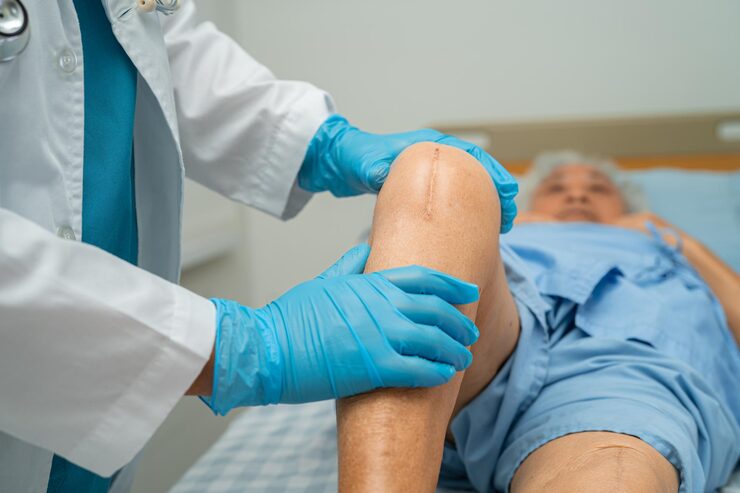
Step 6: The incision was closed with a proper dressing.
Meanwhile, the surgical team continuously checks the patient’s heart rate, oxygen levels, and blood pressure as it provides them insights about the patient’s condition.
After the knee replacement surgery
Care after surgery is extremely important as it helps in patients’ recovery.
According to the American Academy of Orthopaedic Surgeons (AAOS), more than 9 out of 10 knee replacement surgery continue to work well even after 15 years, helping patients stay active and move pain-free
This phase is described as the postoperative phase, which focuses on the patient’s recovery.
- Pain-relieving medications: Just after the surgery, the surgeon prescribed you some over-the-counter medications to reduce pain and inflammation.
- Light activity: Doctors encouraged patients to step up and try some physical activity, like small walk within 24 hours under the supervision of an orthopaedic surgeon. This eliminates the chances of blood clotting, improves circulation, and speeds up the recovery process.
- Hospital stay and recovery: After the procedure, most patients stay in the hospital for 3 to 5 days to ensure they are recovering well and can safely begin their rehabilitation journey.
- Regular physiotherapy: Patients are advised to take active rehabilitation within 24 hours of knee replacement surgery, as regular physiotherapy helps in regaining strength and mobility, and reduces the risk of scar tissue and blood clots.
How long should I wait to walk after knee surgery?
The recovery time of knee replacement surgery is 6-12 months. However, patients start small walks within a day using support after a surgery, and go on a drive within 4 weeks, and within 3 to 6 months, patients can perform routine activities.
Mostly, the recovery time also relies on a person’s strength and lifestyle choices. The recovery cycle follows three phases:
Phase 1: Initial recovery
- This stage goes up to 6 weeks.
- Many patients stand, walk, and return home within 1 to 3 days, depending on their overall health and progress.
- You will see swelling and pain, which gradually reduce over time.
Phase 2: Intermediate Recovery stage
- This stage goes from 6 to 12 weeks.
- At this point, you will likely regain enough strength and mobility to return to work, drive, and engage in light physical activities.
- Gradually develop better balance and strength.
Phase 3: Final Recovery Stage
- This stage period is from 3 to 12 months.
- You will see tremendous recovery reaching this stage, and can comfortably do exercises such as swimming and cycling.
- Reaching this stage, you will see your swelling reduced, pain gone, and your strength restored.
Recovering from knee replacement surgery is not a miracle; it’s a result of the effective treatment plan. It clearly implies how important it is to consult with the best orthopedic doctor for knee replacement surgery. If knee pain is affecting your daily life and you’re exploring surgical solutions, you can book consultation with Dr Kishore Kumar Panda, as he can guide you through every stage of the treatment process, and post-recovery support.