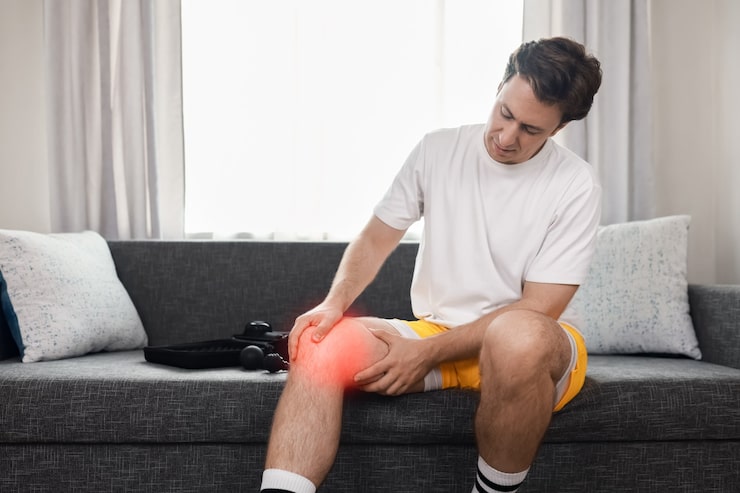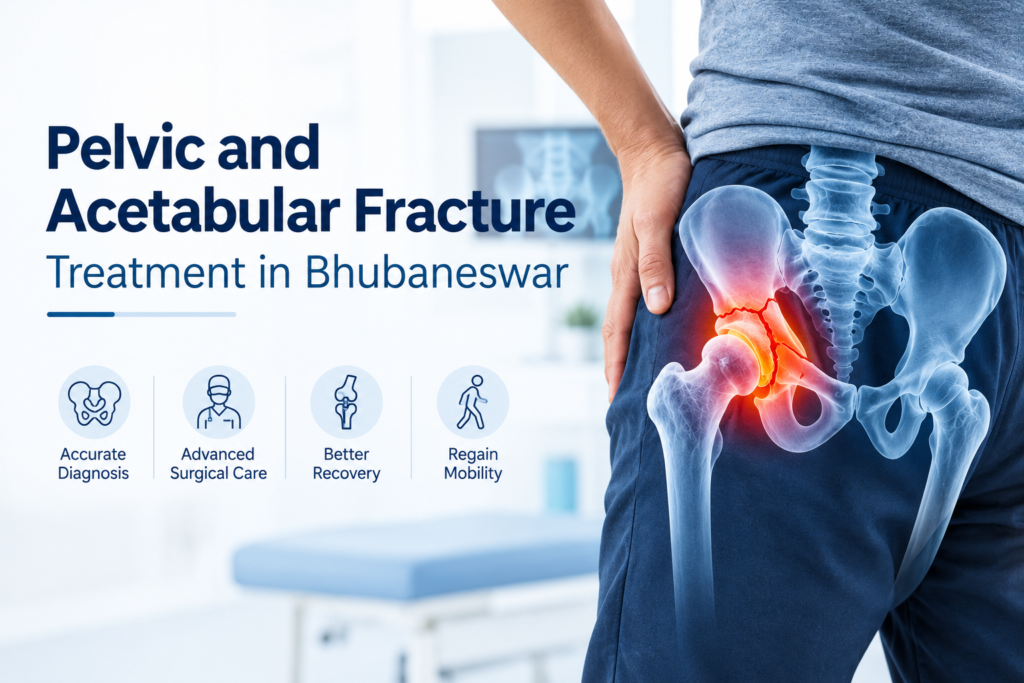

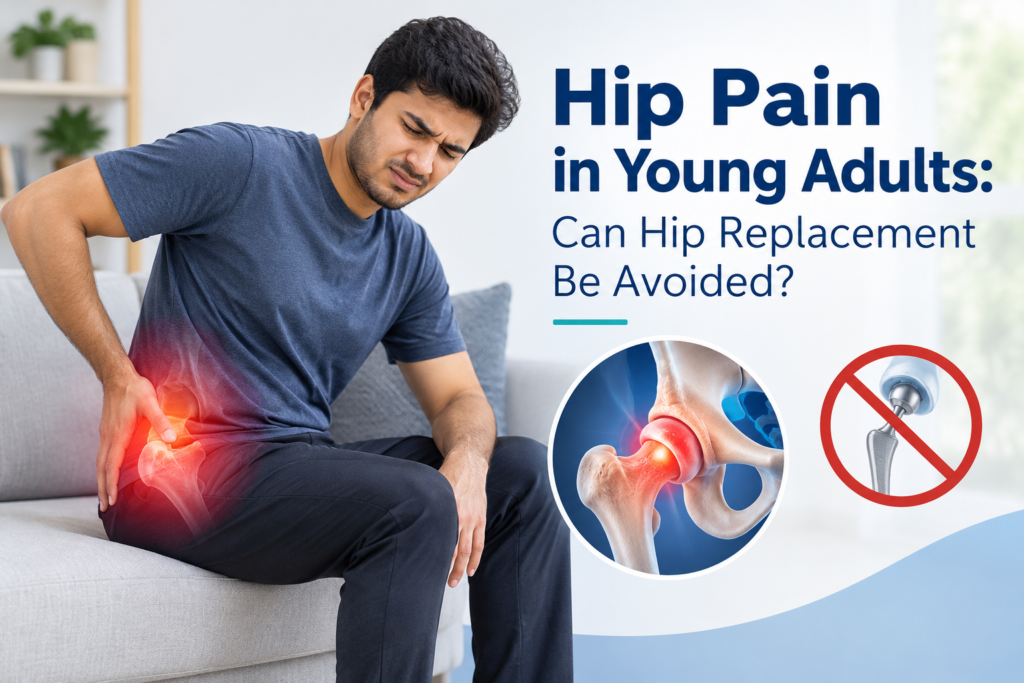
People often think that hip pain only affects the older generation, over 50 years of age, but that’s not true. Nowadays, hip pain also affects younger people too. According to research, hip pain affects people ranging in age from 15 to 60; if left untreated, it can spread to other parts of the body, such as the thigh, hip, and groin area.
For young adults, hip preservation surgery provide viable treatment alternatives for hip problems without undergoing hip replacement surgery. In older people, several conditions can cause hip pain, such as low bone density, osteoarthritis, or bursitis. But in younger individuals, an injury or soft tissue damage could be the cause of hip pain.
As observed by Dr. Kishore Kumar Panda, many younger people ignore hip problems at an early stage, sometimes because of the fear of surgery, but the truth is that hip replacement surgery is not the only treatment modality; other options are available too, which only an orthopaedic doctor can tell you after diagnosing your condition.
Hip Pain in Young Adults – 5 Common Causes
Most younger individuals ignore hip pain by calling it normal pain, but the truth is that one should never ignore hip pain at a younger age because once you ignore it, it can worsen over time and subsequently lead to hip deformity such as Femoroacetabular impingement (FAI).
That’s why, whenever hip pain strikes, you should consult an experienced orthopaedic doctor, such as Dr. Kishore Kumar Panda, to find the root cause of it. So that, you can receive treatment at the right time.
Here are the possible causes of hip pain in young adults:
- Sometimes hip bones transform into abnormal shapes, which cause stiffness and pain in the joints; this represents Femoroacetabular impingement (FAI) conditions.
- When femoral heads get restricted blood supply, it leads to continuous hip pain and further bone damage; this morbid condition is also known as avascular necrosis (AVN).
- Intense physical activities cause muscle strain, which further leads to hip pain or tenderness around the hip.
- In some cases, cartilage surrounding the hip socket is damaged and causes chronic hip and groin pain.
- Greater trochanteric pain syndrome (GTPS) manifests as lateral hip pain near the proximal thigh.
Signs of Hip Problems in Young Adults That You Shouldn’t Ignore
Numerous signs clearly indicate that you may be suffering from hip problems. Here are some of them:
Unbearable hip pain
This is the primary sign of hip problems. It represents an underlying issue that could be the cause of your hip pain, which can be identified after examining the pain area.
Tenderness
If you feel pain just by touching it, it could be a sign of bursitis. It happens when the small sacs around the hip joint become affected.
Clicking sensation
Sometimes, a person may feel a clicking or locking sound when stepping up from a chair or performing any physical activity that involves hip use.
Can Hip Replacement Be Avoided?
Yes, various treatment options are available that can help you restore your hip joint without undergoing hip replacement. Let’s check them:
Non-surgical options
Numerous non-surgical alternatives remain accessible for the treatment of hip problems, such as:
- Over-the-counter medication
- Physiotherapy
- Corticosteroids, and platelet-rich plasma (PRP) injections
These conservative and non-surgical treatments work best for initial conditions; if the individual’s condition is severe, an orthopaedic surgeon may recommend surgical procedures.
Hip preservation surgery
It’s one of those treatments that can restore the hip without the need to replace it with a new one. Because of that, it’s the most favourable treatment modality among young adults.
According to Dr. Kishore Kumar Panda, here are the techniques used in hip preservation surgery:
- Hip arthroscopy: For the treatment of labral tears, pincer lesions, and femoroacetabular impingement (FAI)
- Core decompression: For the treatment of AVN or osteonecrosis.
- Periacetabular osteotomy: It is used for hip dysplasia to reposition the hip socket.
- Containment procedures: These procedures are mainly used to treat Perthes Disease, especially in children and young adults, to preserve their natural hip joint. One technique used is varus derotation osteotomy (VDO).
- Cartilage restoration: To repair cartilage damage, orthopaedic surgeons apply biological tissue to repair the damaged cartilage.
The hip joint preservation surgery is best undertaken by an expert orthopaedic surgeon in the field who knows much about the procedure and ensures that patients are well aware of the hip surgery precautions regarding the procedure to take.
Conclusion
People often have the misconception that hip pain is inevitable, lose hope, and spend their whole lives in pain. However, many non-surgical and surgical options are available to get rid of hip pain. Non-surgical options are suitable for adults whose hip pain is in the initial stage, but once it becomes worse, one should consider surgical options such as hip preservation surgery. Nobody wants to live with hip pain, especially at a young age, do you? You can contact Dr. Kishore Kumar Panda, who has expertise in treating hip pain.