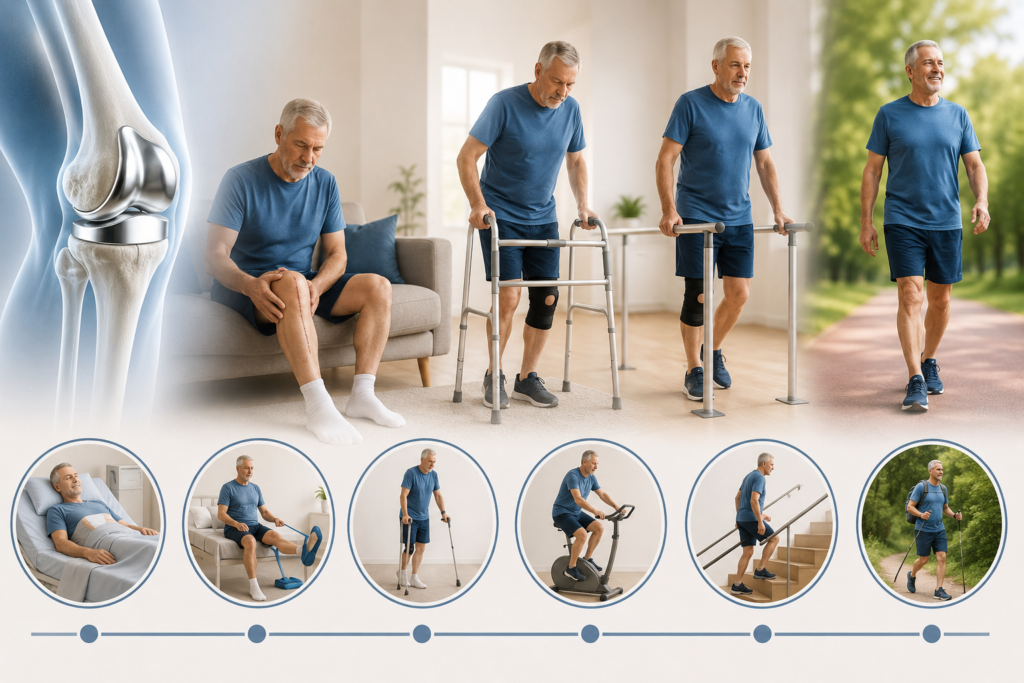

Pain after knee replacement surgery may indicate that your knee is healing or signal that an underlying medical complication is emerging that requires urgent medical attention. Whenever there is pain, there is a need for a medical checkup, and ignoring post-follow-up appointments can only increase the challenges for you.
Dr. Kishore Kumar Panda shared valuable insights on knee replacement and the different reasons for knee pain, especially after the treatment. Understanding the possible causes can help patients clear their doubts and encourage them to consult an orthopaedic doctor before the symptoms get worse.
Is knee pain after knee replacement surgery normal, and when should you worry?
Yes, it’s absolutely normal to have knee pain after knee replacement surgery. During the surgery, the orthopaedic surgeon performs the surgery under anaesthesia, so the patient does not feel pain during the surgery. But when the effect of anaesthesia wears off, patients start to feel pain, which is completely normal.
Apart from this, during the initial days after surgery, the muscles begin to return to their normal shape. Patients may experience swelling, stiffness, and pain, but these are common because the ligaments, tendons, and muscles surrounding the surgical area take time to heal.
However, sometimes patients still feel pain after healing, so instead of guessing the reason, it’s important to consult your surgeon because, if not treated on time, this pain can lead to some chronic issues.
Why Does My Knee Still Hurt After Knee Replacement?
So, the reason could be anything, and it’s better to consult your doctor. According to Dr. Kishore Kumar Panda, there might be numerous reasons behind pain after knee replacement surgery, and you should be aware of them:
#1 Maybe it’s swelling or inflammation
It’s obvious to experience swelling and inflammation after surgery, as they are common responses to the procedure and indicate that you are on the recovery path. You may even experience extreme swelling or pain when you try walking or performing any physical movement.
#2 Perform your routine activities too early
Recovery isn’t something that can happen instantly. You should understand that it takes time to return to your routine activities. Patients often ignore their doctor’s advice and start performing routine activities too soon, which puts pressure on their knee joints and causes extreme pain. Therefore, follow your doctor’s advice before performing any physical activity after knee replacement surgery.
#3 It could be an infectious pain
Sometimes, an infection develops around the artificial knee joint or in the surrounding areas; this causes intolerable pain, redness, swelling, and inflammation. According to research, a knee infection after knee replacement affects 1 in every 100 individuals who undergo knee replacement surgery. If an infection is the cause of knee pain, individuals should contact their orthopaedic surgeon immediately instead of becoming their own doctor.
#4 Signs your knee replacement implant may be loose or improperly aligned
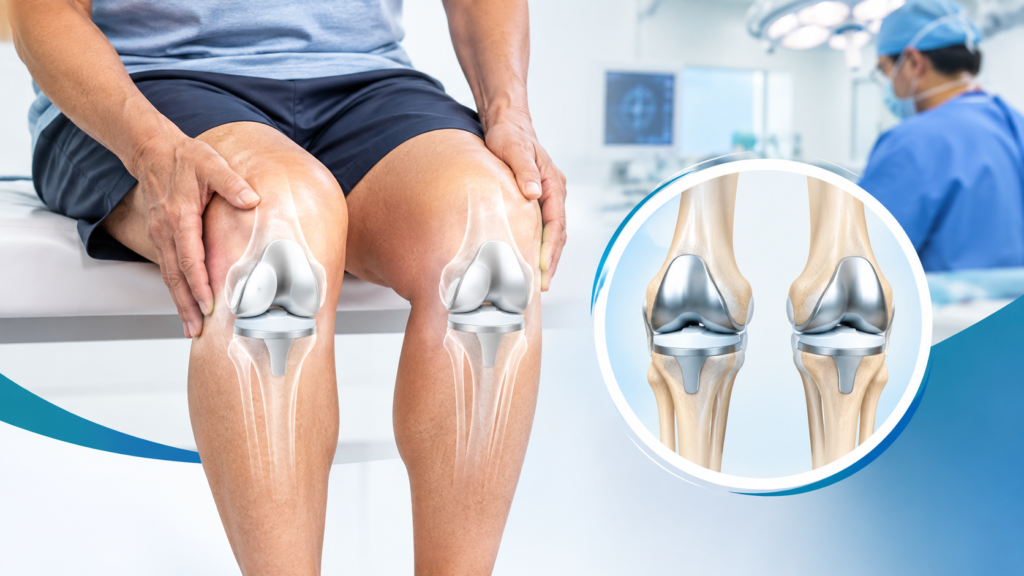
Sometimes, prosthetic malposition can also be the primary reason for knee pain. It can be anything like loosening, instability, or inappropriate positioning that makes artificial knee joints unstable, which can further cause knee pain. Signs may include difficulty standing, discomfort, and a feeling that your knees are gradually becoming unstable.
Consulting your surgeon can help you understand the possible reasons behind the pain. They may use tests such as X-rays or other diagnostic tests to get a clear picture of what exactly is causing the pain in your knee joint and take appropriate action to treat it.
#5 Excessively developed scar tissues
After surgery, scar tissue development is a common part of healing, but main problems can arise when this scar tissue becomes thick or is produced excessively. This complication represents arthrofibrosis (stiff knee syndrome). It results in discomfort and rigidity within the knee joint, particularly noticeable during bending or extension movements. It’s important to diagnose and plateau it at the right time before it progresses into something worse.
Conclusion
In regard to “Why does my knee still hurt after knee replacement?”, it is advisable to consult your surgeon to gain a comprehensive understanding of the underlying causes of knee pain following replacement surgery.
People undergo knee replacement surgery to get rid of knee pain, but if a person still suffers from knee pain even after the surgery, it can have a mentally draining effect. It further compels people to overthink about the pain, and over time, they may find themselves experiencing anxiety and depression.
That’s why you should never ignore pain after the treatment. If knee pain lasts more than a couple of days, see an best orthopedic surgeon like Dr. Kishore Kumar Panda for permanent relief.