
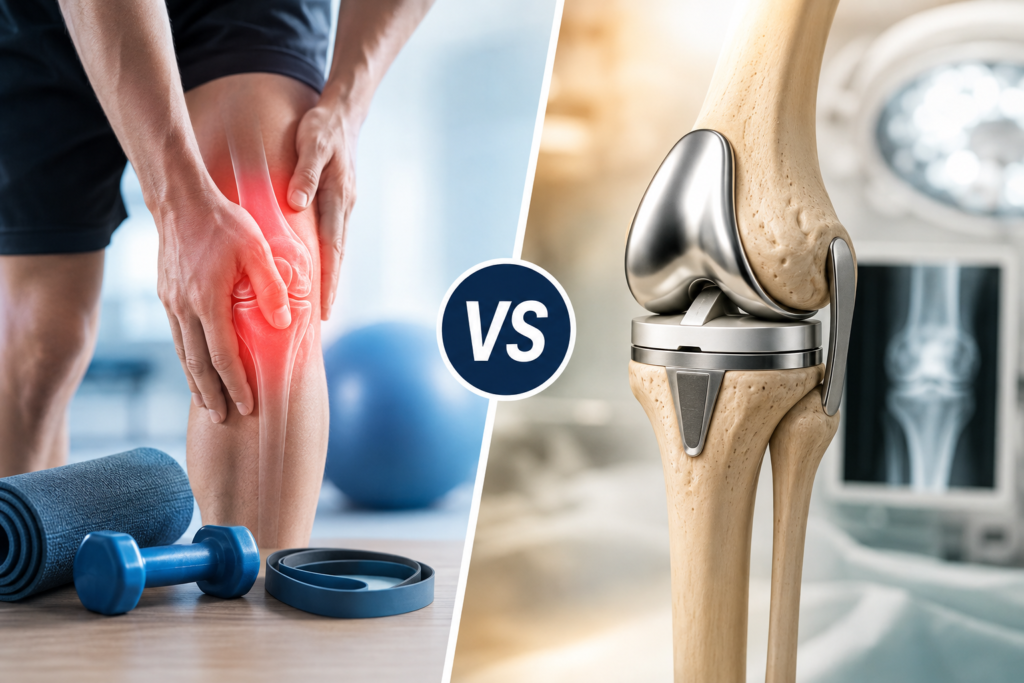
Ignoring treatment only because of surgery can increase your knee difficulties. Knee replacement surgery is always considered to be a last resort to treat knee problems. At first, doctors diagnose the root cause of knee pain, and based on that, they decide what treatment to apply.
People are often confused about “Is knee replacement surgery necessary?” but it hinges on the severity of knee pain. If the knee pain is curable with non-surgical options such as over-the-counter medications, corticosteroid injections, lifestyle changes, and therapies, then doctors use them to treat the problem. However, if the knee pain is caused by an extreme reason, then knee replacement is the only option.
According to Dr Kishore Kumar Panda, his first priority is to diagnose the knee pain in detail, and based on that, he suggests the most suitable treatment for the patient.
Non-surgical knee treatment options
The best alternatives to knee replacement treatment is non-surgical options. After diagnosis, an orthopaedic doctor recommends that individuals opt for non-surgical methods such as:
Medications & topical approach
Over-the-counter medicines are effective in reducing pain and swelling if taken in the appropriate manner as suggested by doctors. It includes, NSAIDs, and topical creams or gels containing diclofenac.
Injections
Numerous injections are helpful in relieving pain and swelling, such as hyaluronic acid injections, corticosteroid injections, and PRP. They are not a permanent treatment modality, but they can improve knee mobility and lubrication and support the knee function again.
Physical therapies & light exercises
According to Dr Kishore Kumar Panda, the best treatment for knee pain is physical therapy, as it improves muscle strength and is helpful in reducing pain and inflammation. It includes:
- low-impact exercises such as walking, cycling, and swimming
- glute and hip muscle activation exercises such as clamshells and bridges
- quadriceps-based exercises such as mini squats, sit-to-stand, and leg raises
- Calves strengthening exercises such as hamstrings, quadriceps, and IT band.
Adjusting weight and lifestyle
One mistake that can make bad knees worse is adopting a sedentary lifestyle, such as eating unhealthy foods, being less physically active, and being obese. It’s important to incorporate a Mediterranean-based diet, such as:
- plant-based food such as fruits and vegetables
- whole grain (quinoa, brown rice, or barley)
- seafood (tuna, salmon, and sardines)
- legumes
- nuts and seeds
Hot and cold therapy
Hot and cold therapy has been reported to be effective in relieving pain and reducing stiffness. As per NCBI, cold and heat therapy have proved to be effective in reducing pain. Even 29% of quadriceps strength improved after applying a cold massage. Applying an ice pack for 15 to 20 minutes, then a heat pack, provides enormous relief from knee pain.
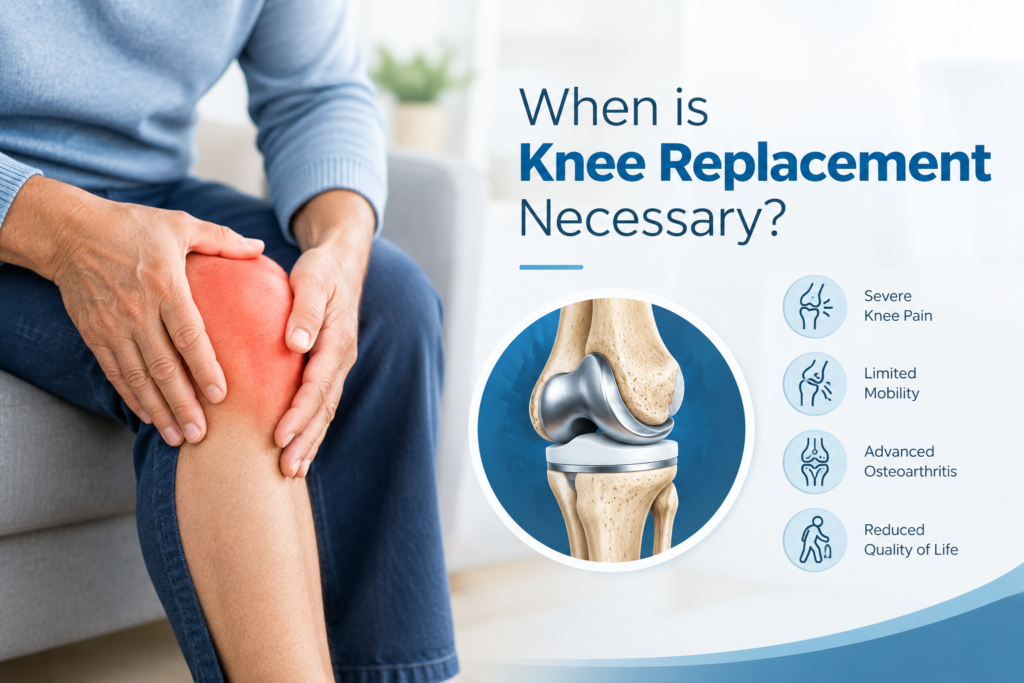
When is knee replacement surgery really necessary?
When knee pain progresses to a worsening stage, no other treatment may be effective enough to treat it properly. That’s an indication that one should stop searching and consult the best orthopedic doctor, Dr Kishore Kumar Panda, for knee replacement surgery.
Various conditions can be responsible for the progression of knee pain, such as:
- Avascular necrosis
- Rheumatoid arthritis
- Post-traumatic arthritis
- Osteoarthritis
- Or any knee injury
Apart from this, numerous signs that can help doctors identify whether a person needs a knee replacement or not.
Many times, people have doubts like, “What are the first signs of needing a knee replacement?” Here are some signals that knee replacement surgery may be mandatory for the patient:
- The first signs of needing a knee replacement are uncontrolled knee pain, muscle tightness, and pain during almost all physical activities that seem easy for you.
- You tried every possible non-surgical treatment, like weight management, joint injection, and medication, but still get no relief from pain.
- Your knee feels rigid when sitting for only a short duration, and when standing, your body takes more time to return to its normal position.
- You feel impotent to do basic daily chores such as walking, climbing, exercising, and other activities.
- Your imaging tests also show little or no space between the cartilage, which resulting in bone-on-bone contact.
Knee replacement vs non-surgical treatment: which is better?
When it comes to choosing the best treatment option for knee pain, we always focus on “best,” don’t we? But, in medical terminology, nothing is considered best unless the patient gets relief from it.
According to NCBI, patients experienced so much relief after undergoing knee replacement surgery compared with non-surgical treatments. However, knee replacement surgery is always performed when knee pain symptoms are getting worse day by day or the patient doesn’t get any relief from non-surgical options.
Knee pain cause stiffness, swelling, inflammation, or discomfort while walking and even sitting. At that time, the only thing patient want is “relief.” It does not matter whether it is knee replacement or non-surgical treatment.
Conclusion
Whether you have knee pain or any kind of knee injury, one question always spirals in your mind like “Is knee replacement surgery necessary?” It’s obvious to be scared when everywhere you see content about knee replacement surgery, but that’s not always the reality.
Before considering surgical options, you have non-surgical treatment options to try. This can be decided by your orthopaedic surgeon after an in-depth evaluation of your knee condition. Medication, physical therapy, injections, weight loss, and lifestyle adjustments are some non-surgical treatment options for knee pain you can try.
If you are wondering about the best treatment option for knee pain, you can consult Dr Kishore Kumar Panda. He has expertise in treating knee-related problems and has helped numerous patients.