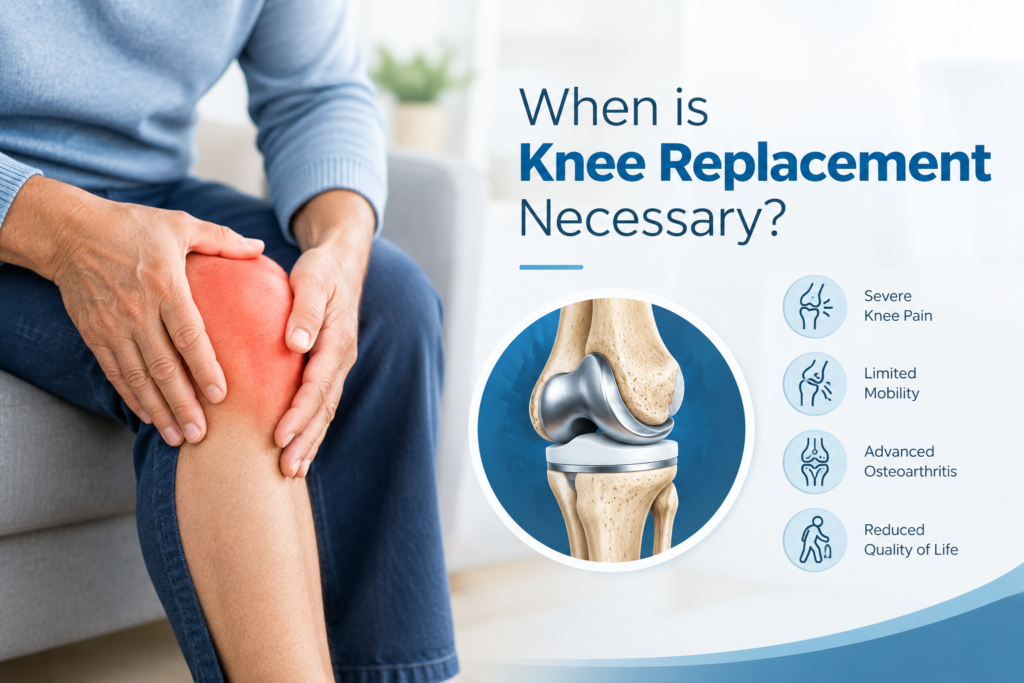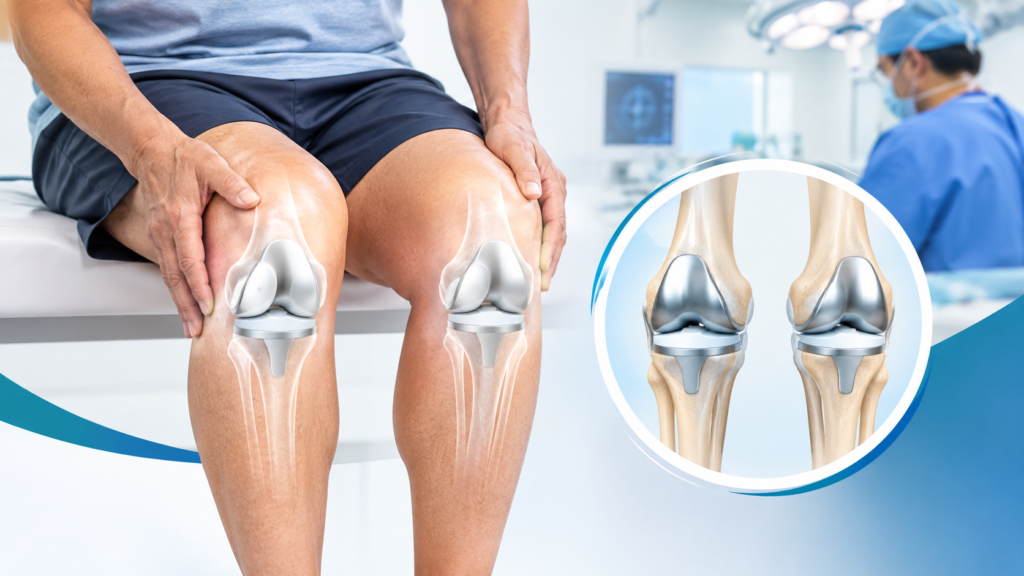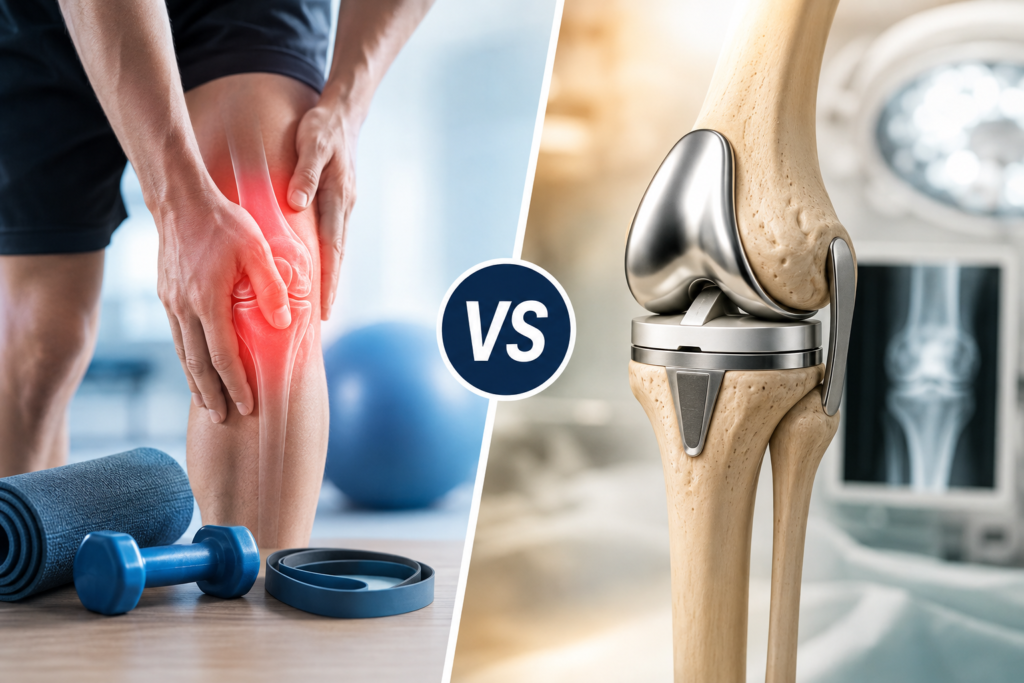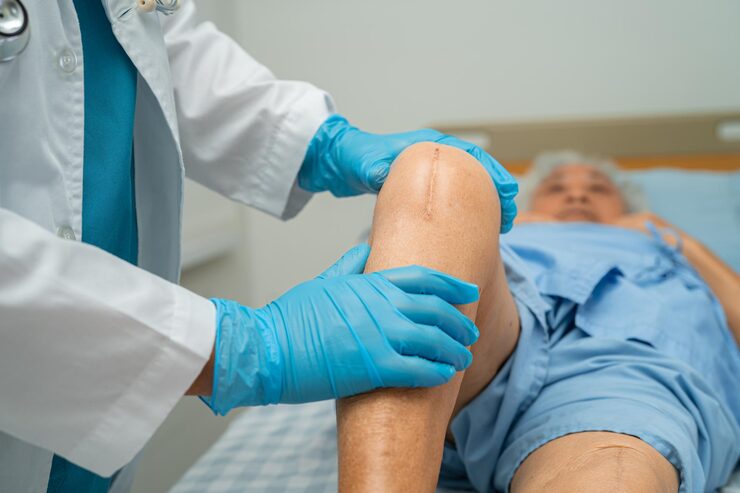

Knee replacement is a surgical procedure to replace deformed cartilage with a prosthetic implant. According to the NHS research, most individuals leave the hospital within 1 to 3 days after surgery.
You can walk within 1 to 2 days after surgery, but the knee replacement recovery time is 3 to 12 months for complete recovery, during which you may feel comfortable doing basic tasks. However, complete recovery can take up to a year, as it also depends on the individual’s health.
Dr Kishore Kumar Panda explains the recovery timeline, how it progresses week by week, and how much time it takes for an individual to walk after knee replacement surgery.
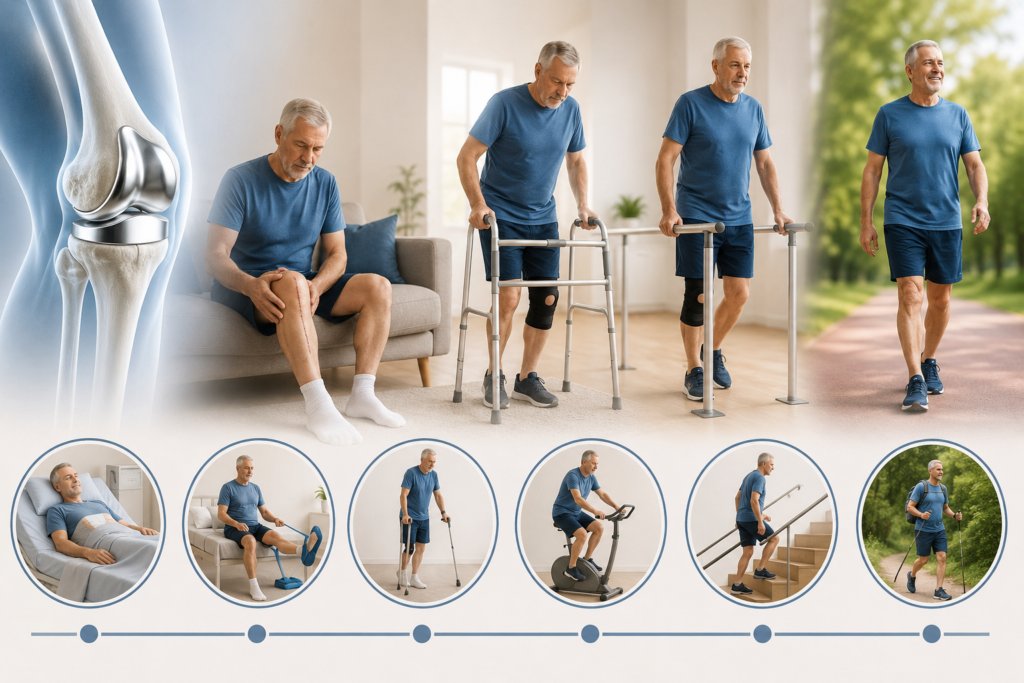
Knee Replacement Recovery Timeline: Week-by-Week Guide
You might be wondering how long does knee replacement recovery takes, but it takes 3 to 12 months. It differs from patient to patient and also depends on an individual’s overall health. Here’s how much an individual improves each week during recovery:
Hospital day 0-1: Starting the recovery
- Knee replacement surgery is performed on this day, and doctors suggest complete bed rest.
- Doctors use physiotherapy to help patients regain their strength and also encourage them to walk gradually with support.
Week 1: Beginning to move
- During this week, patients start walking using assisted devices or walkers.
- Patients started basic knee exercises
- Take proper medication to manage their pain and swelling.
Week 2: Managing pain and swelling
- In the second week of surgery, patient start to feel a bit easier when making simple movements.
- Swelling, soreness, and stiffness are still likely to occur, especially after activity and exercise.
- Physiotherapy will be ongoing to manage swelling and pain.
Week 3: Working on strength
- Your knee might feel a little stronger by your third week while it is healing.
- Try to keep your walks longer each day and continue with your physiotherapy regimen by strengthening your leg.
- Getting out of a chair, walking from room to room, and using stairs may become easier.
Week 4: Regaining mobility
- In the 4th week of knee replacement surgery, the patient experiences significant gains in walking and performing daily routine-based activities.
- As you improve, you might start decreasing dependence on a walker or a gait aid.
- Focus should be on building strength in the muscles around the knee and also on improving flexibility and balance.
- You would gain confidence with increased walking duration.
Week 5-6: Returning to normal activities
- Reaching the 5th to 6th week, patients can stand without walking sticks.
- Even some patients might be able to drive at this stage, but it also depends on an individual’s strength and recovery power.
- During this week, the recovery process mainly focuses on regaining strength, stamina, and coordination.
- Physiotherapy after knee surgery will still be part of this week.
Weeks 7-8: Feeling confident and independent
- By weeks 7 and 8, you will probably be able to carry out even more normal functions on your own.
- Waking may become more comfortable, and you gain more flexibility and knee strength.
- You might resume some low-impact exercises or movements, but in the meantime, high-impact, jumping activities or exercises that might subject the artificial joint to excessive pressure should be avoided.
Weeks 9-12: Progressing through recovery
- The 9-to-12-week milestone usually sees improvement in the way your leg moves and how confident you feel managing the everyday tasks.
- Walking, shopping, and even climbing stairs may now feel a lot easier than they did, and even doing light housework may be achievable.
- Your knee should be feeling and working better, but a bit of stiffness will be unavoidable. It’s also normal for you to experience mild swelling around the new knee and any unusual feelings within the new artificial joint.
3-6 Months: Increasing strength
- By 3 to 6 months, you may find that your pain has significantly decreased.
- You feel that your capacity to perform low-impact activities such as walking, swimming, or cycling will most likely improve.
- Further progress in regaining muscle strength and tissue elasticity should still occur.
6-12 Months: Body recovered in a healthy state
- For some patients, the next 6 to 12 months are considered the late stage of recovery.
- You should feel more comfortable and stable in your knees.
- This is the time when strength, flexibility, and confidence start to return.
- Some people may still feel that the knee can get stiff or ache, especially after prolonged standing, and their final return depends on their health, rehabilitation, lifestyle, and how the knee replacement affects their knee.
How long until you can walk after knee replacement?
NCBI conducted research on 2,063 individuals who underwent total knee replacement and found that 94% of patients started walking within just 32 days without any support. Further, around 83% of individuals started climbing stairs within 42 days after their surgery.
That research is inducive to understand the knee replacement recovery process. Individuals can walk within 1 to 2 days after the surgery, but they require assistance from a nurse, family member, or physiotherapist. However, to perform more activities, patients need more weeks to months to recover properly.
Conclusion
Not every patient recovers within the same timeframe. Some may recover faster within a few months, while others may take a year for complete recovery. But, based on observations, the knee replacement recovery time can vary from 6 to 12 months.
Individuals who follow regular check-ups and doctors’ guidelines may recover faster. Apart from this, it’s important to avoid high-intensity activities during your recovery process. If you have any doubts regarding knee replacement, you can contact Dr Kishore Kumar Panda.