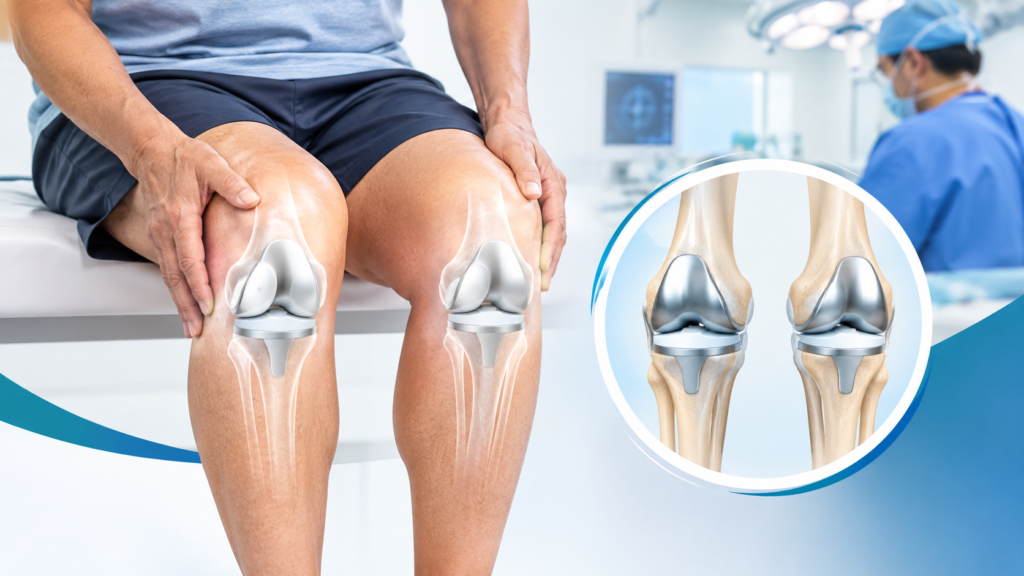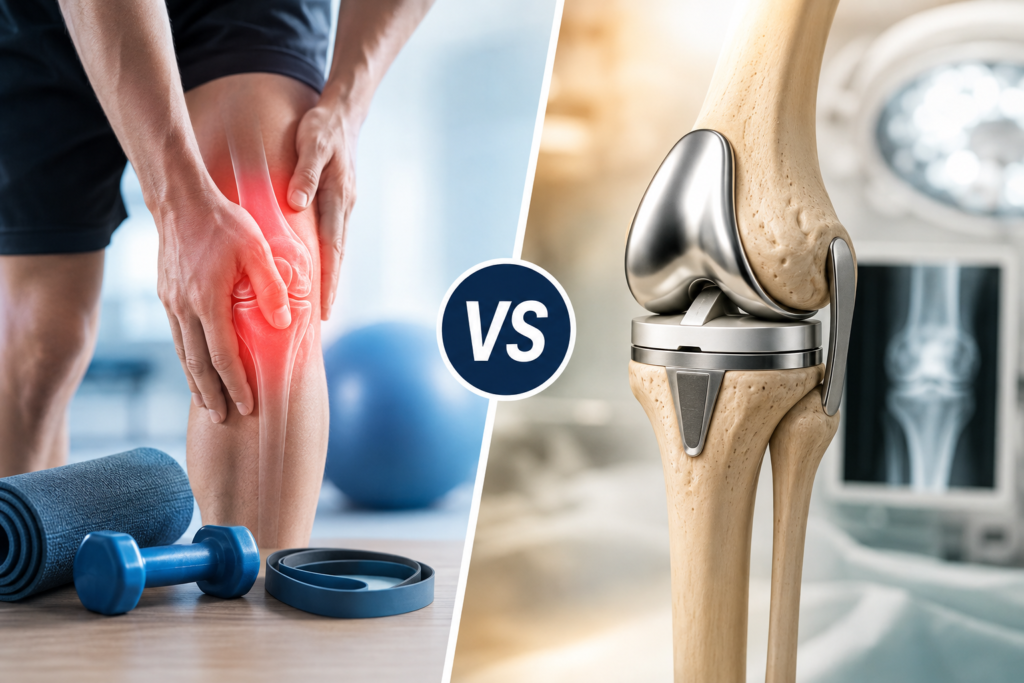

You may be recommended to undergo knee replacement surgery when chronic pain hurts you, making it difficult for you to perform simple activities, you always feel stiffness in your joints, or you have some internal knee injury.
As per the studies conducted by NCBI on 167 patients who suffered from osteoarthritis, approximately 67% of patients lived a normal life despite being treated with non-surgical options. This elucidates the fact that knee replacement surgery is only required in extreme conditions.
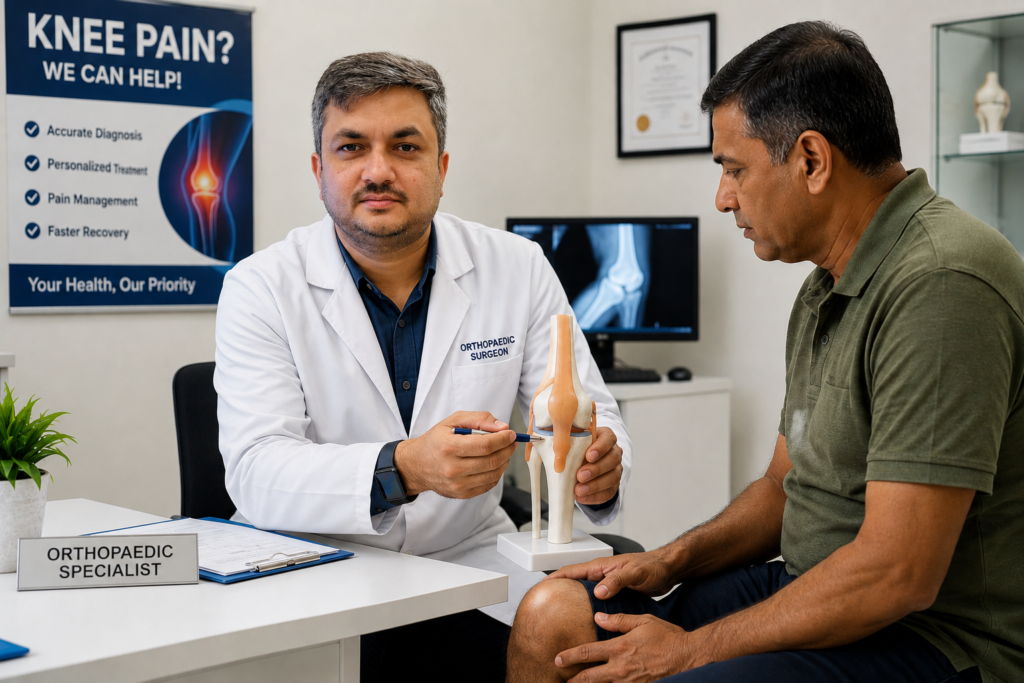
People are always dubious about “When is knee replacement necessary?” According to Dr. Kishore Kumar Panda, not every knee pain requires surgery unless non-surgical options are ineffective.
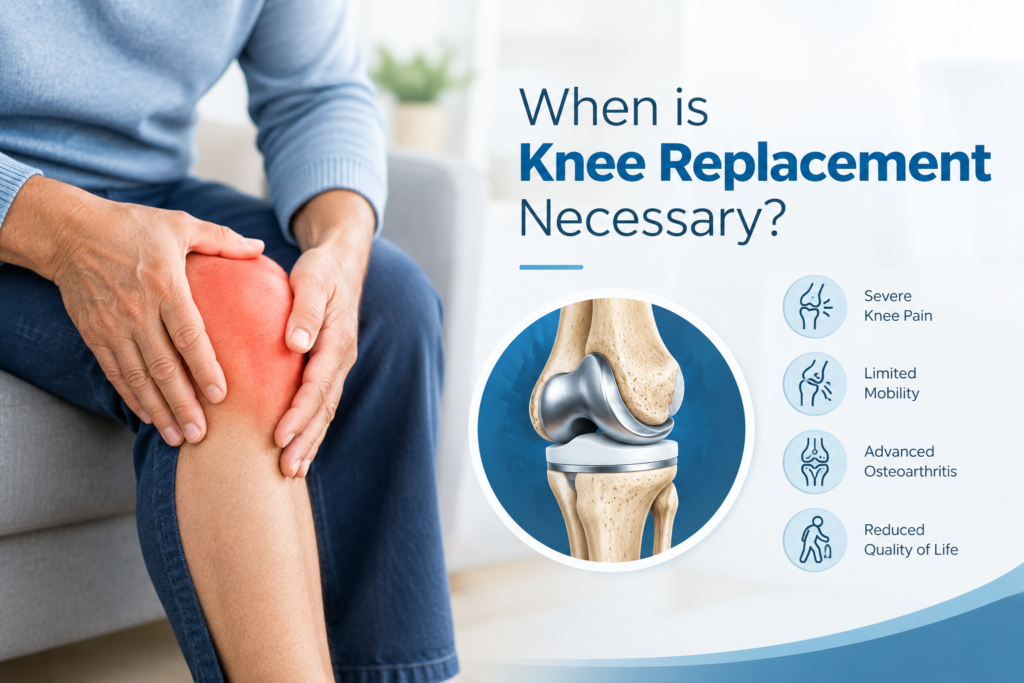
When is knee replacement necessary?
Crippling knee pain always brings hardship, such as walking difficulty, stairs climbing, twisting the knees, or even driving. Yet, resorting to knee replacement is not always warranted, especially when the underlying symptoms are still in their formative stages.
Here, we discuss all the scenarios where an individual needs to undergo knee replacement surgery:
#1 When constant pain affects your quality of life
According to the NCBI, approximately 46% of people noticed limitations in their daily routine activities due to chronic pain. Usually, knee pain disappears within two to three days, but when it starts affecting your daily routine, like resting, sleeping, driving, or performing simple movements, it’s a signal that a person should consult an orthopaedic surgeon and discuss a permanent solution to wipe out pain forever.
#2 When a person loses complete mobility
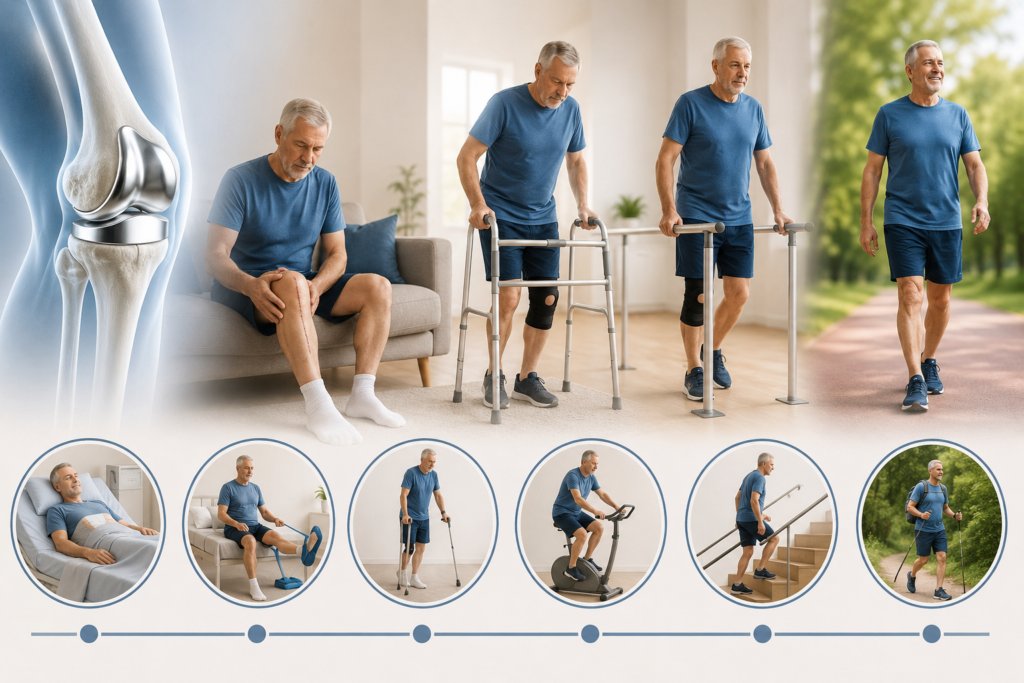
According to Dr. Kishore Kumar Panda, some pain conditions are so bad that an individual doesn’t have enough mobility and strength to reach the clinic. They need external support to walk or even perform routine activities. In those cases, orthopaedic surgeons may need to perform knee replacement surgery to help the patient regain mobility.
#3 When knee pain causes deformity in the joints
Have you seen any change in your leg’s shape or structure? That could be because of a chronic joint condition. During this stage, you may notice some unique changes in your leg, such as misalignment, and this can further lead to changes in the structure of the bones, ligaments, and cartilage, which consequently causes the leg to bow inward or outward. These conditions are hard to tolerate and require urgent medical attention.
#4 When conventional treatments failed to reduce pain
You tried over-the-counter medications, took physical therapy, applied every kind of pain-relieving ointment, or even received injections, but your knee pain still remains the same. This could point to a serious underlying condition that you shouldn’t ignore. By consulting the best orthopaedic doctor such as Dr. Kishore Kumar Panda, you can learn the root cause of your knee pain, and this can further help you make the right treatment decision. Usually, when non-surgical modalities fail, orthopaedic surgeons recommend knee replacement as the last resort.
#5 When knee stiffness persists throughout the day
You feel like something is locking your knee joints. You feel tired and experience pain in your knees after climbing just a few stairs. Straightening your leg after keeping it bent for a long time seems very formidable to you. Ignoring such symptoms can make them worse day by day. Such conditions may require coercive measures like surgery after discussing them with your orthopaedic surgeon.
Conclusion
Knee replacement surgery must be recommended when the degeneration of the joint is severe and leads to pain, significant impairment of function, increased stiffness or deformity of the joint, and lack of symptom relief despite proper nonsurgical treatment.
It cannot be based only on the age of the patient or imaging studies; the decision is based on the whole package of symptoms and physical and medical history.